Engineering Immersion: Designing Player Experience for Co-Branded IP Themed Rides
- Beston Amusement Rides
- Jul 17, 2025
- 4 min read
In the highly competitive ecosystem of themed entertainment, co-branded intellectual property (IP) rides have emerged as a strategic cornerstone. These collaborations—between amusement parks and globally recognized franchises—hold the promise of drawing in pre-engaged audiences while enhancing narrative fidelity. Yet, the true determinant of success lies not merely in leveraging a recognizable brand but in crafting a ride experience that resonates viscerally with players, engaging them across emotional, spatial, and narrative dimensions.
The Convergence of IP and Ride Mechanics
Modern players no longer seek passive entertainment. They crave embodiment—where theme, environment, and mechanical interaction converge seamlessly. For a co-branded IP ride to succeed, it must encapsulate the essence of the source material while delivering a physically kinetic experience.
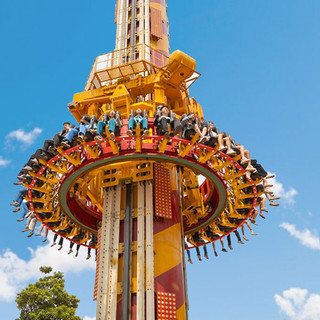
Consider the swing tower—typically a high-rotation vertical ride offering expansive aerial perspectives. When themed around a co-branded IP, the challenge is to maintain the mechanical thrill while amplifying immersion. Re-skinning the structure with franchise-specific iconography is insufficient. The ride narrative, queue theming, and onboard audio must all reinforce a cohesive universe. For instance, synchronizing ascent sequences with recognizable character dialogue or soundtrack crescendos builds temporal alignment between player anticipation and narrative peak.

Narrative Cohesion and Kinetic Synchronization
A critical but often overlooked design vector is the synchronization of narrative cadence with mechanical tempo. In a worm coaster, which usually features low-profile undulating tracks and mild accelerations, thematic pacing must compensate for the ride's relatively subdued G-forces. Here, storytelling assumes primacy. Using animatronics, diegetic soundscapes, and spatial lighting to evoke the illusion of rapid progression or danger can enhance perceived thrill levels.
Integrating the IP’s visual motifs along the track’s trajectory—not merely as set dressing but as interactive narrative checkpoints—can transform an otherwise modest ride into a compelling episodic experience. The goal is not to distract from the ride’s limited mechanical intensity but to transmute it through context. A worm coaster themed after a popular fantasy IP could, for example, simulate a “journey through a magical underworld,” aligning each track dip with narrative beats such as ambushes or discoveries.

Queue Design as Pre-Ride Onboarding
Player experience begins long before physical engagement with the ride vehicle. Queue systems must be reimagined as narrative preludes—onboarding mechanisms that acclimate guests to the world they are about to inhabit. Co-branded IPs offer unique advantages here, providing rich character arcs and lore that can be embedded into waiting areas through multimedia installations and interactive touchpoints.
Effective queue design also anticipates dwell time psychology. In rides like swing tower, where capacity turnover may be high but throughput remains constrained by safety protocols, queue experiences should be modular—scalable in complexity depending on anticipated wait duration. This can include optional augmented reality (AR) integrations, IP-specific mini-games, or narrative audio tours delivered through mobile apps.
Player Agency Within Constrained Ride Systems
The challenge in many ride types—including swing tower and worm coaster—is that they operate on fixed tracks or axis motions, limiting direct player control. However, interactivity is not solely dependent on user inputs. Psychological agency—the perception of influence—is achievable through dynamic feedback systems.
For instance, ambient lighting that responds to player sounds, or synchronized visual elements triggered by rider movement (e.g., hand gestures captured via onboard sensors), can instill a sense of responsiveness. In co-branded rides, this illusion of agency becomes even more vital; players must feel not just present but pivotal within the narrative landscape of the IP.
Thematic Fidelity and Engineering Constraints
Designers must balance thematic ambition with engineering feasibility. Swing tower rides often involve high-altitude exposure and rotational forces, which can limit the installation of fragile thematic embellishments. To maintain fidelity without compromising safety, materials must be carefully selected—using weather-resistant composites and weight-minimized façade elements.
Additionally, IP partnerships often impose strict aesthetic guidelines. Themed elements must not only align with the park’s mechanical systems but also pass brand compliance reviews. This introduces a unique production tension: the need to translate cinematic language into architectural and mechanical form. A minor inconsistency—such as an off-brand color palette or scale discrepancy—can fracture immersion.
Multisensory Design as an Engagement Amplifier
A ride's sensory envelope is central to player immersion. Sight and sound are foundational, but smell, touch, and motion enhance depth. For worm coaster experiences, installing olfactory emitters (e.g., earthy tones to simulate subterranean settings) can bolster realism. Similarly, integrating haptic feedback into ride restraints or seating—synchronized with on-track events—reinforces physical storytelling.
Swing tower designs benefit from wind manipulation. While natural airflow is a byproduct of rotation, designers can enhance directional gusts using fan-assisted systems, aligning them with narrative stimuli (e.g., flying through a dragon’s wake or spaceship turbulence).
Lifecycle Engagement Beyond the Ride Itself
Player experience design extends beyond the ride’s runtime. Thematic continuity should persist into merchandise zones, AR extensions, and post-ride content delivery. Co-branded rides must serve as both climax and gateway—immersing players while also funneling them deeper into the IP’s universe.
This is particularly crucial in attractions aimed at younger audiences. A worm coaster may be a child's first physical engagement with a beloved character or universe. Offering take-home storybooks, app-based content, or even NFT-based digital badges tied to ride milestones can perpetuate engagement beyond the park visit.
Performance Metrics and Iterative Refinement
Finally, experience design must be data-informed. Guest satisfaction surveys, throughput analysis, dwell time metrics, and emotional tracking (via wearable sensors or facial recognition in pilot studies) can provide actionable insights. These metrics are vital in adapting co-branded ride experiences over time, particularly as IP narratives evolve and audience expectations shift.
Retrofitting a swing tower with updated story arcs, or modifying the set dressing on a worm coaster to align with a new franchise season, ensures longevity and narrative relevance. Iteration, rather than reinvention, becomes the strategy for sustaining player engagement across operational lifespans.
Conclusion
Designing for player experience in co-branded IP themed rides demands more than superficial integration. It requires a deep, systemic alignment of mechanical design, narrative structure, and sensory engagement. Rides like swing tower and worm coaster, while mechanically constrained, can be transformed into compelling narrative vessels through careful, data-driven, and thematically disciplined design. In a saturated entertainment landscape, only those attractions that deliver both thrill and story—function and fiction—will resonate meaningfully with modern players.


Comments