Engineering Thrills: Balancing Excitement and Safety in Modern Ride Design
- Beston Amusement Rides
- Oct 20, 2025
- 4 min read
The pursuit of exhilaration is deeply ingrained in human nature. From early mechanical carousels to advanced roller coasters powered by magnetic propulsion, the objective has remained the same—deliver an unforgettable experience that borders on the limits of human tolerance, without breaching them. Achieving this delicate balance between excitement and safety is both an art and a science, particularly for amusement park ride design companies tasked with shaping the future of entertainment engineering.
The Psychology of Thrill
Every successful amusement ride begins with an understanding of human psychology. The sensation of excitement is a physiological response to controlled fear. Designers manipulate speed, motion, and sensory stimuli to provoke this reaction while maintaining strict safety parameters. The fine line between exhilaration and discomfort is defined by perception—what feels dangerous must never actually be so.
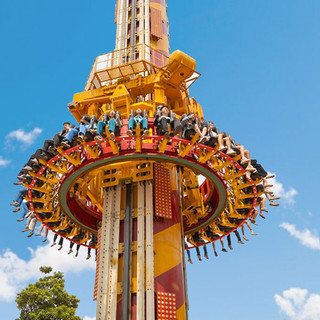
Popular fairground rides, such as drop towers and spinning pendulums, capitalize on this principle. They create a momentary illusion of risk while being meticulously engineered to minimize actual hazard. This psychological interplay forms the foundation upon which every mechanical and structural decision is made.

The Engineering Paradox: Pushing Limits Within Constraints
Creating a ride that feels extreme yet remains safe is a paradox. Structural engineers, mechanical designers, and safety specialists must operate within stringent regulatory frameworks while delivering cutting-edge performance. The process begins with mathematical modeling and simulation. Every force exerted on the human body—gravitational, centripetal, or inertial—is calculated and evaluated against international safety standards.
For instance, a roller coaster’s G-force profile is analyzed to ensure it stays within acceptable limits for human tolerance. Excessive positive G-forces can cause loss of consciousness, while prolonged negative G-forces can induce nausea or disorientation. Amusement park ride design companies deploy computational fluid dynamics, finite element analysis, and motion simulators to predict these physiological effects before physical prototypes are even constructed.

Material Science and Structural Integrity
The reliability of a ride depends heavily on material selection and fatigue analysis. Modern attractions utilize advanced alloys, corrosion-resistant coatings, and composite materials to enhance strength-to-weight ratios. Engineers calculate stress concentrations, weld fatigue cycles, and environmental degradation to predict the long-term behavior of every structural component.
Thermal expansion, vibration, and microfractures are meticulously monitored through embedded sensors. These devices continuously feed data to centralized control systems, enabling predictive maintenance and early fault detection. This level of precision ensures that even the most daring rides remain structurally sound under all operational conditions.
Redundancy: The Hidden Layer of Safety
Redundancy is a cornerstone of ride safety design. Each critical system—braking, restraint, and power—is equipped with multiple backup mechanisms. For example, modern roller coasters often employ magnetic braking systems supported by mechanical backups in case of power failure. Similarly, seat restraints are designed with dual-locking systems to prevent accidental release.
This layered approach extends to operational protocols. Before each launch, automated diagnostics verify every safety sensor, pressure line, and actuator. Any irregularity immediately halts the ride sequence, preventing human error from compromising passenger safety. Such invisible safeguards allow designers to explore new realms of motion and acceleration without compromising trust.
Regulatory Oversight and Compliance
Global safety standards, such as those defined by ASTM International and the European Committee for Standardization (CEN), establish rigorous design and testing requirements. Amusement park ride design companies must validate compliance at every stage—from conceptual design to final installation. Testing often includes static load assessments, dynamic performance trials, and emergency evacuation drills.
Regular audits and third-party inspections reinforce accountability. Beyond regulatory obligations, many companies adopt internal safety protocols that exceed industry standards. This commitment to continuous improvement not only enhances reliability but also reinforces public confidence in large-scale attractions.
Balancing Aesthetics with Functionality
A ride’s visual identity plays a crucial role in attracting visitors. The sleek curves, towering structures, and thematic details of popular fairground rides contribute as much to the overall experience as the ride motion itself. However, these design elements must coexist harmoniously with mechanical and structural demands.
Architectural engineers and industrial designers collaborate to integrate lighting, sound, and kinetic effects without compromising safety. Thematic enclosures and façade designs are tested for aerodynamics, weather resistance, and maintenance accessibility. The fusion of artistry and engineering ensures that the final creation is both visually captivating and technically robust.
The Role of Data and Digital Twins
Modern ride design has evolved beyond physical testing. The integration of digital twins—virtual replicas of real-world rides—allows engineers to monitor and optimize performance in real time. These digital ecosystems process sensor data to simulate wear, predict maintenance intervals, and refine operational parameters.
This continuous feedback loop enhances both efficiency and safety. By identifying patterns of mechanical stress or passenger discomfort, design teams can make informed adjustments that elevate the overall experience. Predictive analytics also reduce downtime, ensuring consistent operation during peak visitor seasons.
Training, Operations, and Human Oversight
Even with the most sophisticated systems, human oversight remains indispensable. Ride operators undergo extensive training to manage emergency scenarios, recognize abnormal vibrations or sounds, and respond to sensor alerts. Routine maintenance checks, lubrication schedules, and bolt-torque inspections are performed daily.
Standardized communication protocols ensure swift coordination between maintenance teams and control centers. This operational discipline transforms complex machinery into a predictable, manageable system—one capable of delivering thrills without jeopardizing safety.
Future Directions in Ride Design
As technology advances, the boundary between physical and virtual thrill experiences continues to blur. Hybrid rides combining mechanical motion with augmented or virtual reality are redefining what it means to feel excitement. Such integrations demand an even greater emphasis on synchronization, calibration, and motion control to prevent sensory dissonance.
Sustainability is also shaping the next generation of rides. Energy-efficient propulsion systems, regenerative braking, and recyclable materials are becoming central to design strategies. Amusement park ride design companies are now expected not only to engineer excitement but also to minimize environmental impact—a dual challenge that defines the future of entertainment engineering.
The Enduring Equation of Thrill and Trust
The success of any attraction depends on its ability to inspire confidence as much as it delivers adrenaline. The sensation of danger must always remain an illusion, carefully orchestrated through precise engineering, rigorous testing, and continuous oversight. When executed correctly, this equilibrium between excitement and safety becomes seamless—allowing visitors to experience awe without fear.
In the modern age of mechanical sophistication and digital integration, the principles remain timeless. Innovation must always serve safety, and safety must never constrain imagination. The ultimate goal is not just to design rides that excite but to craft experiences that endure—both in memory and in trust.


Comments