The Convergence of Aesthetic Destinations and Mechanical Thrill: The Fusion Design of Internet Celebrity Check-in Spots and Amusement Rides
- Beston Amusement Rides
- Oct 22, 2025
- 4 min read
In recent years, the design philosophy behind amusement attractions has undergone a profound transformation. The traditional amusement park, once focused solely on the visceral rush of mechanical motion, now intersects with the visual language of social media culture. Spaces are no longer built only to exhilarate riders but to captivate lenses. The rise of internet celebrity check-in spots—locations designed for digital documentation and aesthetic engagement—has redefined the concept of entertainment architecture. This synthesis of photogenic environments and kinetic experiences represents a new frontier in both design and commercial strategy.
The Evolution of Amusement Ride Design
The earliest amusement rides were feats of engineering designed to challenge human perception. From the centrifugal power of the rotor ride to the gravity-defying loops of roller coasters, their appeal lay in motion and adrenaline. However, the modern spectator demands more than sensation. They seek narrative, immersion, and shareability. Designers now construct spaces that operate simultaneously as performance art, architectural spectacle, and interactive content.
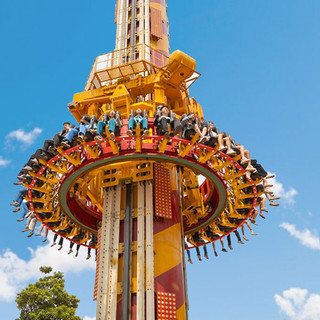
An extreme fairground ride today is not simply a mechanical apparatus; it is a spatial event. The design integrates lighting systems, sculptural enclosures, and thematic storytelling. This multidimensional approach appeals to both physical and digital audiences. Riders experience velocity and disorientation, while onlookers capture symmetry, texture, and color gradients that resonate on social media platforms.

The Influence of Visual Culture
The ubiquity of image-sharing platforms has irrevocably influenced spatial design. Amusement environments now compete in a global visual marketplace where the photographable moment is paramount. Designers consider camera angles, lighting conditions, and background coherence during the conceptual stage. Architectural features once deemed ornamental have become functional tools for digital dissemination.
Internet celebrity check-in spots leverage this phenomenon by emphasizing compositional harmony. Elements such as reflective surfaces, chromatic installations, and dynamic signage create focal points for photography. When merged with kinetic attractions, the result is a hybridized experience—part thrill ride, part cinematic tableau. The visitor is both participant and curator, orchestrating their visual narrative within the mechanical theater.
Integration of Amusement Mechanics and Spatial Aesthetics
The technical convergence between aesthetic design and mechanical innovation defines the next generation of entertainment environments. Manufacturers like Beston Amusement Rides exemplify this synthesis by engineering attractions that prioritize both performance and visual impact. Their structures demonstrate an understanding that form and function must coexist seamlessly.

Modern installations utilize translucent materials, programmable LED arrays, and architectural framing that complements the rhythm of motion. A pendulum ride, for instance, may feature integrated light sequencing that transforms each swing into a choreographed visual event. Similarly, the curvature of a coaster track might double as an architectural sculpture when viewed from above. These enhancements ensure that even when static, the attraction remains photogenic and contextually immersive.
The Psychology of Participation
At the core of this design movement lies an understanding of user psychology. The desire to document and share experiences is a fundamental component of contemporary leisure culture. Amusement rides, traditionally characterized by transience, now serve as permanent digital anchors through online representation. The check-in photograph becomes an artifact of participation, symbolizing both bravery and aesthetic taste.
Designers exploit this behavioral pattern by crafting experiences that balance accessibility and exclusivity. An extreme fairground ride, while physically demanding, becomes approachable through its visual appeal. Color palettes, thematic motifs, and environmental integration reduce intimidation and encourage engagement. Visitors perceive not just the challenge of the ride but its beauty and prestige as a social landmark.
Technological Synergy in Design Execution
Advanced technologies enable the seamless fusion of aesthetics and mechanics. Parametric design tools allow architects and engineers to simulate both structural stress and visual impact in real time. Lighting control systems synchronize with ride motion to generate dynamic effects. Augmented reality interfaces overlay digital narratives onto physical environments, enriching the visitor’s perception.
The influence of digital design extends beyond visualization. Fabrication methods such as 3D printing and CNC machining make it possible to produce bespoke components with sculptural precision. This allows manufacturers like Beston Amusement Rides to translate conceptual artistry into tangible engineering. Each ride becomes an architectural signature—an emblem of the fusion between spectacle and structure.
Economic and Cultural Implications
The commercial implications of this trend are substantial. By merging amusement functions with visual identity, parks increase dwell time and enhance secondary revenue streams. Cafés, merchandise outlets, and branded installations thrive when strategically positioned near high-traffic check-in zones. Each photograph shared online serves as unpaid advertising, exponentially amplifying visibility.
Culturally, this evolution reflects a shift toward experiential consumption. Visitors no longer attend amusement parks solely for entertainment; they seek self-expression and digital validation. The ride becomes a medium through which personal identity is performed. In this sense, the physical architecture of the park transforms into a collective cultural canvas—continuously rewritten by its users.
Challenges in Fusion Design
Despite its commercial success, fusion design introduces new complexities. Balancing safety regulations with aesthetic experimentation requires precision. Structural components must endure mechanical stresses while maintaining visual coherence. Lighting and media systems must function without compromising energy efficiency or maintenance access. Moreover, the constant demand for novelty challenges designers to innovate without succumbing to superficiality.
There is also a philosophical dimension to consider. When amusement rides become photographic props, the risk arises that sensory engagement diminishes in favor of visual consumption. True fusion design must preserve the integrity of both domains—delivering physical exhilaration and visual delight in equal measure.
Future Trajectories
The trajectory of this design paradigm points toward further integration of technology, interactivity, and narrative. Artificial intelligence may soon customize ride experiences in real time, adjusting lighting, music, and motion based on biometric feedback. Immersive projection systems will transform static architecture into mutable landscapes. Social connectivity will extend beyond passive sharing, enabling collaborative digital experiences across global networks.
Manufacturers at the forefront of innovation, including Beston Amusement Rides, are poised to redefine the boundaries of entertainment design. Their ability to harmonize structural engineering with visual storytelling will determine the evolution of the industry. As the line between art installation and amusement attraction continues to blur, the modern fairground becomes an ecosystem of participatory aesthetics.
Conclusion
The fusion design of internet celebrity check-in spots and amusement rides represents more than a trend; it is a reflection of cultural convergence between mechanical ingenuity and digital expression. The extreme fairground ride now exists not only as a source of thrill but as a visual phenomenon engineered for the age of connectivity. This synthesis of motion and imagery exemplifies how human experience is being reshaped by technology, architecture, and social behavior. The amusement park of the future will not merely entertain—it will narrate, illuminate, and perpetually evolve through the gaze of its audience.


Comments